Interview with Dr. Kaustubh Sharma
March 17, 2026
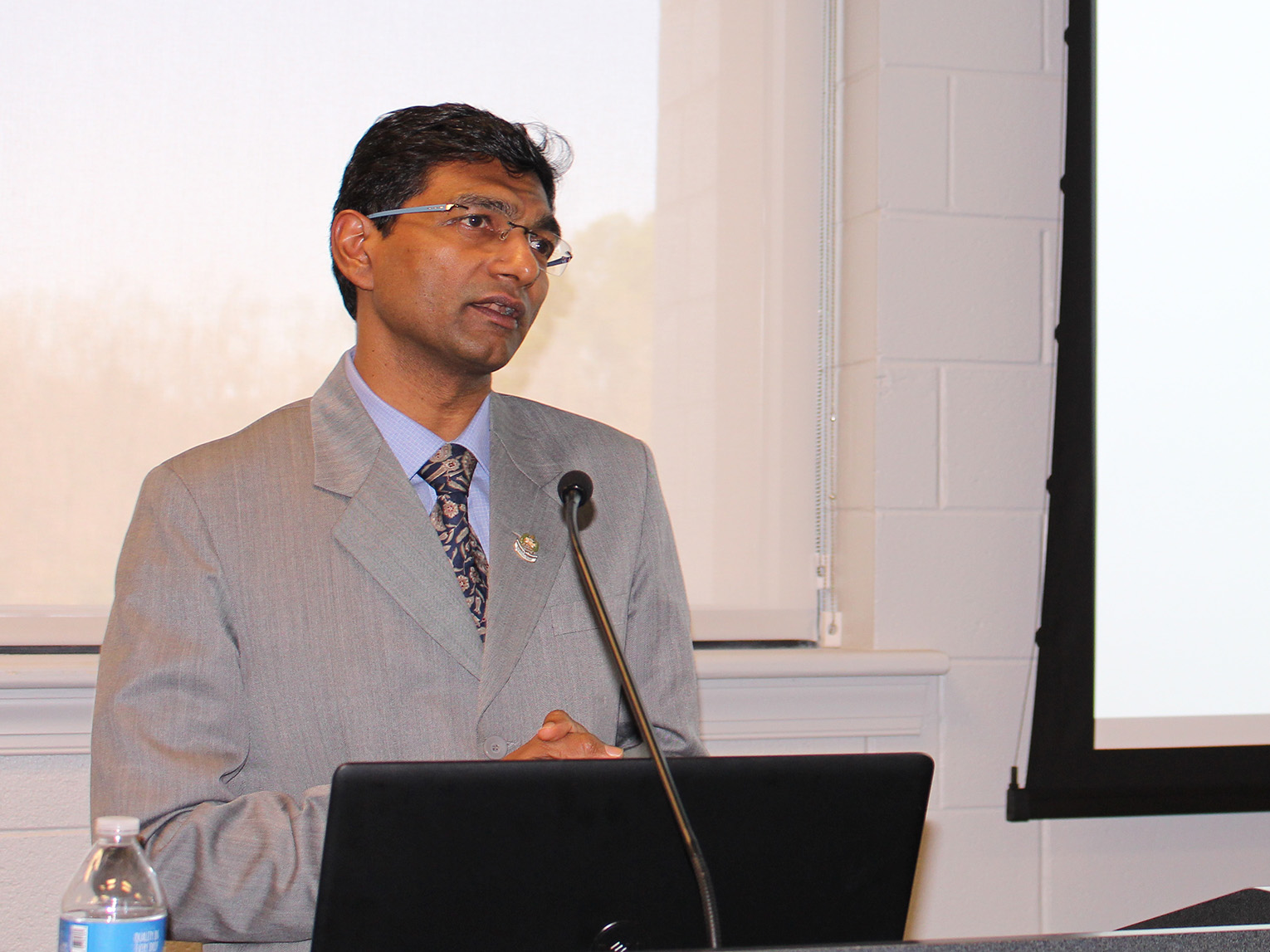
VCU: Thank you for talking with us. Tell us a bit about your current position and work in India.
Kaustubh: After completing a nice and challenging tenure of two years as the Deputy Police Commissioner of the United Nations Police in South Sudan, I returned to join my parent cadre in Punjab, India. I was promoted recently and have been posted as Additional Director General of Police, Security (equivalent to Lieutenant General rank) for the State of Punjab.
After joining my Punjab cadre, I worked briefly with the United Nations as Inspector General of Police in the Anti-Narcotics Task Force of State of Punjab, where I oversaw the operational work of the unit, connected with different stakeholders, monitored interdiction operations and their follow ups, supervised counter smuggling operations and monitored the achievements of the anti-drug campaign. I monitored actions taken on the inputs received on the anti-drug helpline through a chatbot for citizens. Other important aspects of the work related to processing of rewards based on the recently approved reward policy for the sources, successful investigators on interdiction and for successful convictions attained reflecting quality investigations. A good part of work involved pushing districts to divert a small quantity recovery of contraband to court - directed treatment for those volunteering for treatment and facilitation of admissions to the treatment centers. The third part involved monitoring and guiding ground teams for undertaking preventive efforts through meeting students, representatives of the society and different stakeholders. Specific efforts were launched for targeting of drug hotspot areas working in conjunction with the civil administration and following up of on agreed interventions.
As Additional Director General of Police for Security, I undertake five major activities: (1) Responsible for the safety and security of threatened persons and all the dignitaries in the state, making the security arrangements through the field formations for the safety and security of the VIPS; (2) Security of the high value institutions and ensuring their protection, these include prominent dams, electrical grids, and important trunk routes; (3) Licensing and monitoring of all the private security agencies in the state, ensuring compliance with various standards as per the rules and act governing their regulation; (4) Attending various litigation relating to the demands for protection and deciding on the threat perceptions on objective manner in line with the State Security policy and Standard Operating Protocol; and (5) Protection of various installations and issuing guidelines on the emerging threats and procurement of security equipment’s to be supplied to field formations.
VCU: Describe how completing the Humphrey Fellowship program has impacted your work. What were some key elements of the program that you found most useful?
Kaustubh: Completing the Humphrey Fellowship program has had a profound impact on my professional work, particularly in the area of substance abuse prevention and treatment. The program exposed me to the multifaceted nature of the problem, equipping me with knowledge of evidence-based practices and the latest advances in both prevention and rehabilitation. I gained a strong foundation in drug prevention strategies, learning how vulnerable populations can be engaged through interventions at both the individual and community levels.
One of the most valuable aspects was observing innovative approaches in the United States, such as Adult and Juvenile Drug Treatment Courts and their integration with rehabilitation centers. I learned about special provisions for first-time offenders, the role of health authorities in subsidizing treatment, and the collaborative efforts of correctional institutions alongside national, state, and local agencies. Comparing these systems with those in India highlighted
important differences, especially in managing juvenile drug users and incarcerated individuals.
The program also introduced me to the Virginia Foundation for Healthy Youth, which plays a pivotal role in preventing substance use among children and adolescents. With its multimillion-dollar budget, the Foundation supports research and community initiatives, serving as a model for how independent organizations can drive large-scale prevention efforts. Another eye-opening experience was seeing how churches and universities in the U.S. open their spaces for recovery programs like Alcoholics Anonymous (AA), Narcotics Anonymous (NA), and SMART Recovery. This advocacy-driven approach normalizes recovery and provides multiple pathways for individuals seeking rehabilitation.
Equally impactful was my professional affiliation with the Community Anti-Drug Coalitions of America (CADCA) in Virginia. This experience gave me insight into how U.S. organizations influence policymakers, Congress, and the Senate to secure better funding, expand treatment coverage for underprivileged populations, and strengthen policies that restrict access to harmful substances, including vapes and alcohol.
The strength of the Humphrey Fellowship lay in its holistic design: mentorship from seasoned faculty, field visits to organizations tackling substance abuse, access to extensive research resources, diverse university courses, and opportunities for self-study and project work. Classroom sessions on leadership and management further honed my skills. The program emphasized designing evidence-based interventions, encouraging universities to conduct baseline research and follow-up studies to measure impact and make necessary adjustments. Overall, the Fellowship provided me with critical knowledge and global perspectives on substance abuse management. It reinforced the principle that prevention is far more effective than treatment alone in reducing the burden of substance abuse. The exposure to diverse strategies, advocacy models, and community-driven initiatives has deeply enriched my professional approach, enabling me to adapt and implement evidence-based practices in my own context.
VCU: What lessons learned during your fellowship have you been able to apply since returning to your home country?
Kaustubh: One of the most transformative lessons I brought back was the idea of using universities and faith-based institutions as venues for recovery and treatment meetings. This community-based approach, which I observed in Richmond, allowed organizations such as Alcoholics Anonymous (AA) and Narcotics Anonymous (NA) to operate in accessible spaces, normalizing recovery and ensuring continuity of support.
Equally impactful was the concept of offering multiple recovery programs at a single location, coupled with round-the-clock counseling services for individuals in treatment or experiencing mental health crises. Recognizing gaps in treatment retention and rehabilitation outcomes, I was particularly drawn to the SMART Recovery model, which emphasizes self-management and evidence-based practices.
To pilot this initiative in Punjab, I collaborated with SMART Recovery International and secured approval to implement the program in treatment centers. Counselors and psychiatrists were trained through online certification courses provided by SMART Recovery UK, and I personally completed the certification to understand operational requirements. The program was launched across four districts—Mohali, Firozepur, Fatehgarh Sahib, and Tarn Taran—under the supervision of government psychiatrists, who received free training modules. I also developed standardized forms and formats to support implementation and conducted regular follow-ups.
Attendance levels showed encouraging engagement, though initial acceptance posed challenges. Unfortunately, the program was discontinued during the COVID-19 pandemic due to restrictions on public gatherings. I also learned a great deal about community-based prevention programs. Alongside treatment initiatives, I strongly advocated for prevention programs rooted in community coalitions, inspired by my professional affiliation with CADCA. As Inspector General of Police in the Faridkot Range, I launched anti-drug coalition programs in Moga and Muktsar districts with the active involvement of Deputy Commissioners.
The coalitions conducted environmental scans to identify vulnerabilities contributing to substance use, such as poor school infrastructure, neglected public spaces, abandoned buildings, and easy availability of substances. District and local committees were established to advise and monitor interventions, while training was provided to focal points from schools, colleges, and communities. These efforts evolved into sustained campaigns, with the Community Policing wing playing a pivotal role in reaching women and children through systematic awareness drives. This engagement increased reporting of supply-related problems, enabling law enforcement to respond more effectively.
Later, as Commissioner of Police in Ludhiana, I implemented a more comprehensive program targeting crime-prone areas notorious for drug supply. Police personnel were strategically posted to disrupt supply chains, while prevention programs were advanced under the “Drug-Free Workplace” initiative—a concept reinforced during my fellowship at VCU. Industry leaders were engaged to tackle substance use in workplaces, focusing on alcohol, tobacco, and drugs. Community Policing teams further strengthened these efforts by conducting awareness campaigns in densely populated localities, particularly among women and children. This led to increased reporting of supply issues, allowing for focused enforcement. In essence, these initiatives operationalized the Strategic Prevention Framework (SPF) developed by SAMHSA, which I had studied during my affiliation with CADCA.
This version keeps the narrative sharp, avoids repetition, and clearly highlights how you applied fellowship learnings in Punjab through both recovery-focused and prevention-focused programs. Would you like me to also refine this into a formal report-style format (with headings, bullet points, and executive summary) so it can be directly used in official communication?
VCU: What advice would you give to our current cohort of fellows?
Kaustubh: I would encourage the current fellows to make the most of the time that remains in the program. The resources available—particularly access to the library and research databases—are invaluable for shaping and strengthening the projects you have envisioned. The best momentum for implementation comes immediately after returning to your organizations, so prepare to act quickly and decisively.
Stay connected with faculty members, as their guidance will continue to be useful even after you leave. Many are willing to assist remotely, and you should also explore the grants and opportunities offered through the Humphrey program. Professional affiliations deserve special attention; if chosen carefully and pursued with commitment, they provide deep insights and lasting benefits. Spend sufficient time at your host organizations and engage fully with their activities to maximize learning.
If possible, attend conferences during your fellowship. They broaden your perspective, expose you to the latest research, and enhance your understanding of global practices in your field. Equally important is learning from your peers—try to maintain contact with fellow participants, perhaps by setting up quarterly discussions, so that you continue to share experiences and ideas.
To remain in touch with the faculty and mentors, retain their phone numbers and email addresses and do save important resources and correspondences outside of your VCU account. Once your fellowship ends, access to university systems will stop, and having these materials readily available will prove extremely useful.
VCU: Is there anything else you would like to add?
Kaustubh: The importance of contributing to policy development for controlling substance use through evidence-based practices cannot be overstated—particularly in developing countries, where agendas are often politically driven and may lack long-term vision. The knowledge gained during the Humphrey Fellowship should serve as a foundation for influencing the design and implementation of scientifically sound programs. It is essential to continue offering solutions that are both practical and research-driven. VCU has been instrumental in this journey, providing diverse inputs through its faculty, access to extensive library resources and databases, and opportunities to participate in academic programs across multiple fields. For substance abuse treatment and rehabilitation, the exposure offered both on campus and through the fellowship has been invaluable. I extend my sincere gratitude to the faculty and VCU for their guidance, support, and the enriching experience that has significantly shaped my professional outlook and strengthened my commitment to evidence-based reform.